Connectivity for Predictive Maintenance & Industrial Operations

Support connected machinery, industrial IoT (IIoT), remote assets, and predictive maintenance with resilient cellular connectivity designed for demanding industrial environments.

  • One SIM icon

    One SIM

    180+ countries · multi-network fallback

  • Form factor icon

    Any form factor

    2FF, 3FF, 4FF, MFF2, eSIM (eUICC)

  • Protocol icon

    Any protocol

    OCPP 1.6 · OCPP 2.0.1 · MQTT · TLS

  • Scale icon

    Any scale

    No per-SIM monthly minimums

The data reality

Every connected asset helps keep operations running.

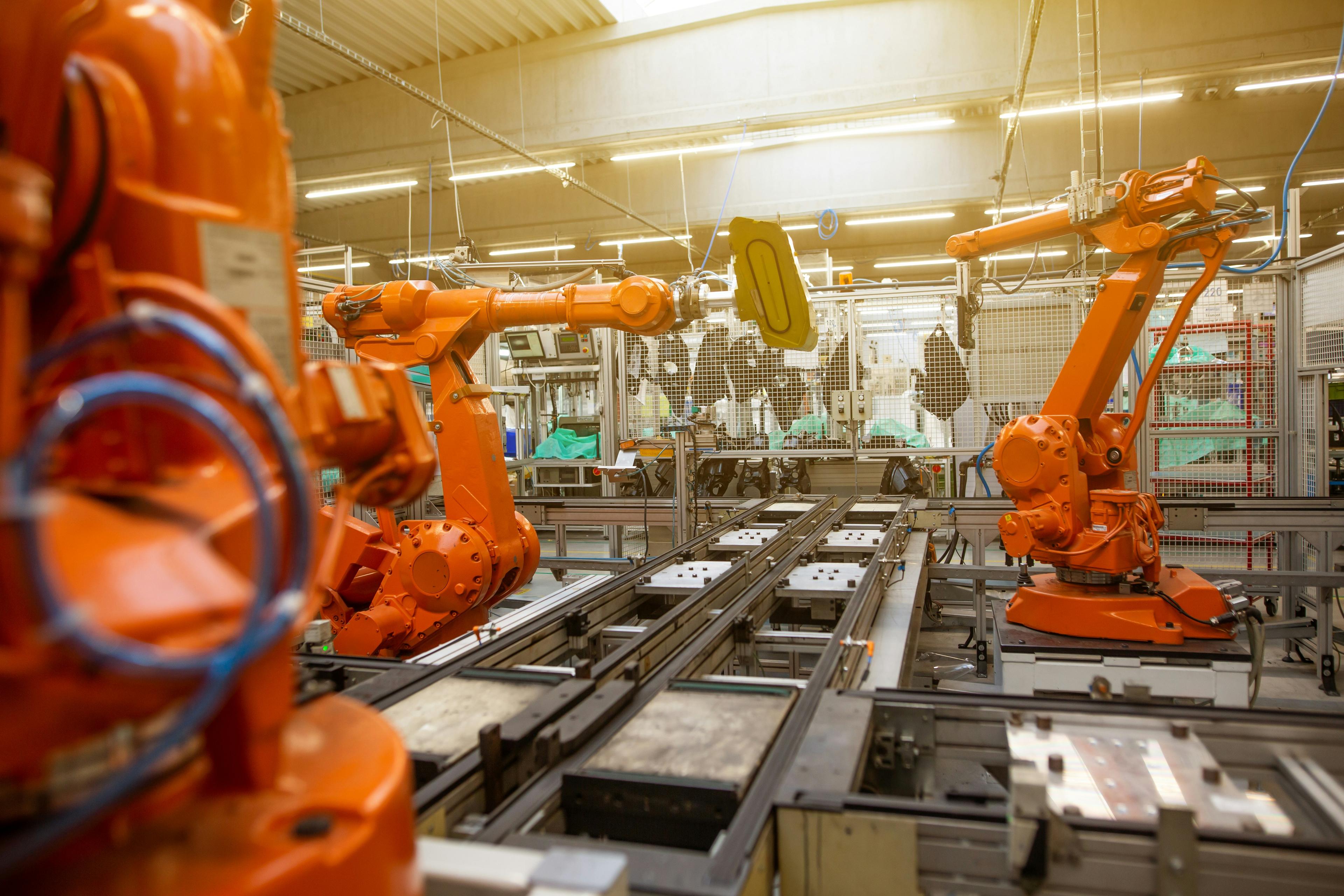
Industrial organizations rely on connected equipment to monitor machine health, automate processes, and respond to issues before they impact production. Reliable cellular connectivity enables real-time visibility across factories, utility sites, warehouses, and remote infrastructure, helping teams improve efficiency, reduce downtime, and support safer operations. The examples below provide a general reference for common Industrial IoT deployments.

Device type
Typical monthly data
What drives the usage
Condition monitoring sensor
20–200 MB
Equipment health monitoring
Smart meter
10–100 MB
Utility monitoring
Industrial gateway
500 MB–5 GB
Aggregating field device data
Remote surveillance camera
5–50 GB
Live video monitoring
Device type
Typical monthly data
Condition monitoring sensor
20–200 MB
Smart meter
10–100 MB
Industrial gateway
500 MB–5 GB
Remote surveillance camera
5–50 GB
Condition monitoring sensor
Smart meter
Industrial gateway
Remote surveillance camera

Ranges are typical for European and North American deployments Simbase observes in production. Actual usage depends on OCPP implementation, telemetry cadence, and what's bundled with the charger (screen, camera, payment, DCS). Numbers should be validated against your own telemetry before committing to a plan.

Where industrial connectivity falls short

Three connectivity challenges industrial organizations face

Unplanned downtime impacts productivity.

Unexpected equipment failures can interrupt production, increase maintenance costs, and reduce operational efficiency. Connected assets rely on reliable cellular connectivity to deliver real-time insights that help teams respond before issues escalate.

Industrial environments demand resilient connectivity.

From manufacturing facilities and warehouses to utilities and remote infrastructure, industrial deployments often operate in challenging environments where dependable connectivity is essential to maintaining operations.

Managing Industrial IoT at scale requires visibility.

As Industrial IoT deployments grow across multiple sites, organizations need centralized control over connectivity, SIM management, and data usage without increasing operational complexity.

What Simbase gives you

Built for Industrial IoT.

  • Multi-IMSI · eSIM

    Connectivity built for demanding environments.

    Automatically connect to supported mobile networks to help industrial equipment, sensors, gateways, and remote assets stay connected across factories, warehouses, utility sites, and field operations.

  • Manage every asset from one platform.

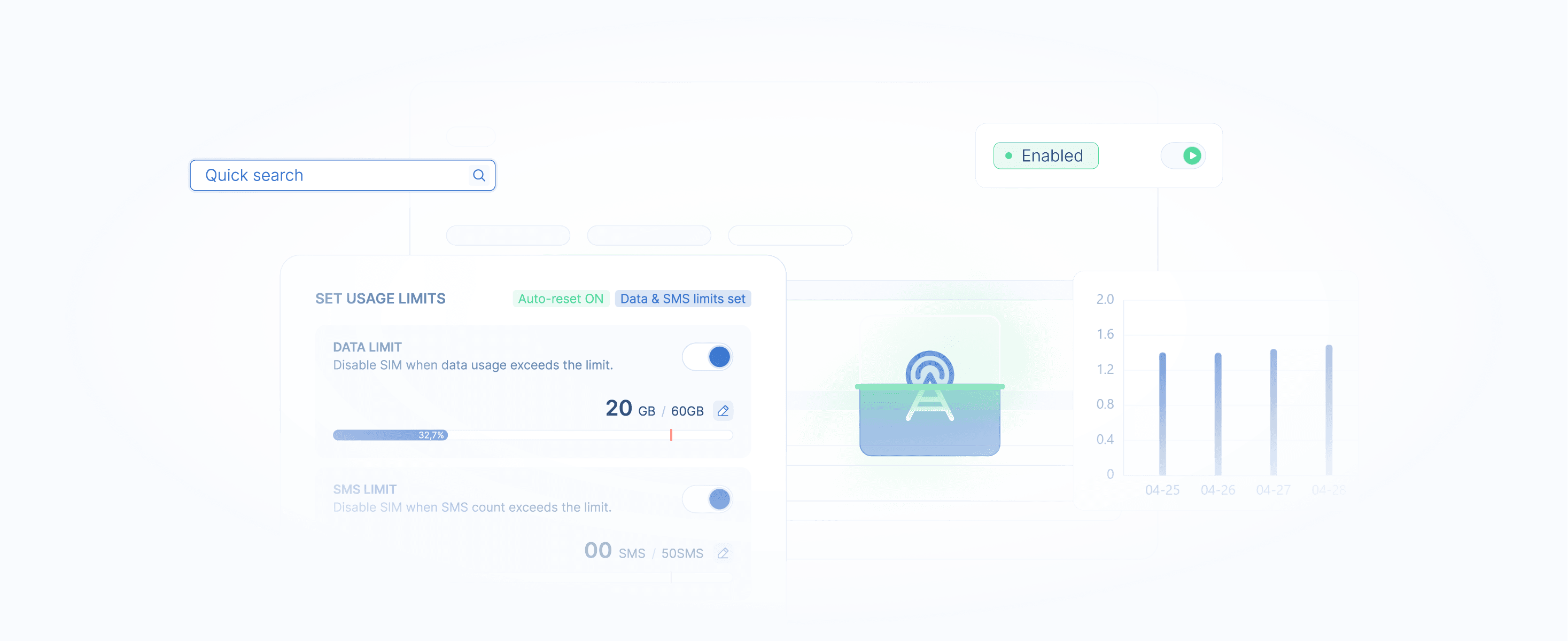
    Monitor SIM status, data usage, and connectivity health through a centralized dashboard designed to simplify Industrial IoT deployments at any scale.

  • API · Webhooks

    Integrate connectivity into your operations.

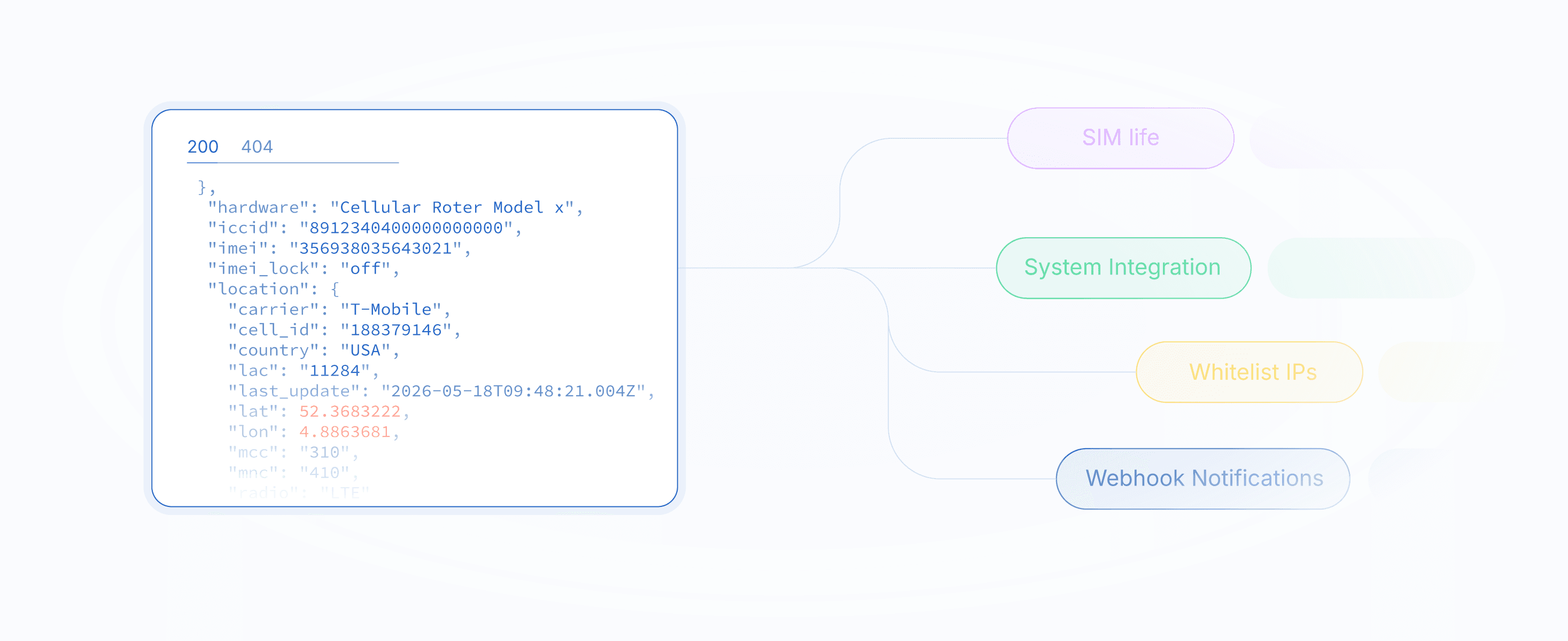
    Use REST APIs and webhooks to automate SIM management, provisioning, and operational workflows across your Industrial IoT ecosystem.

  • Flexible plans that scale with your business.

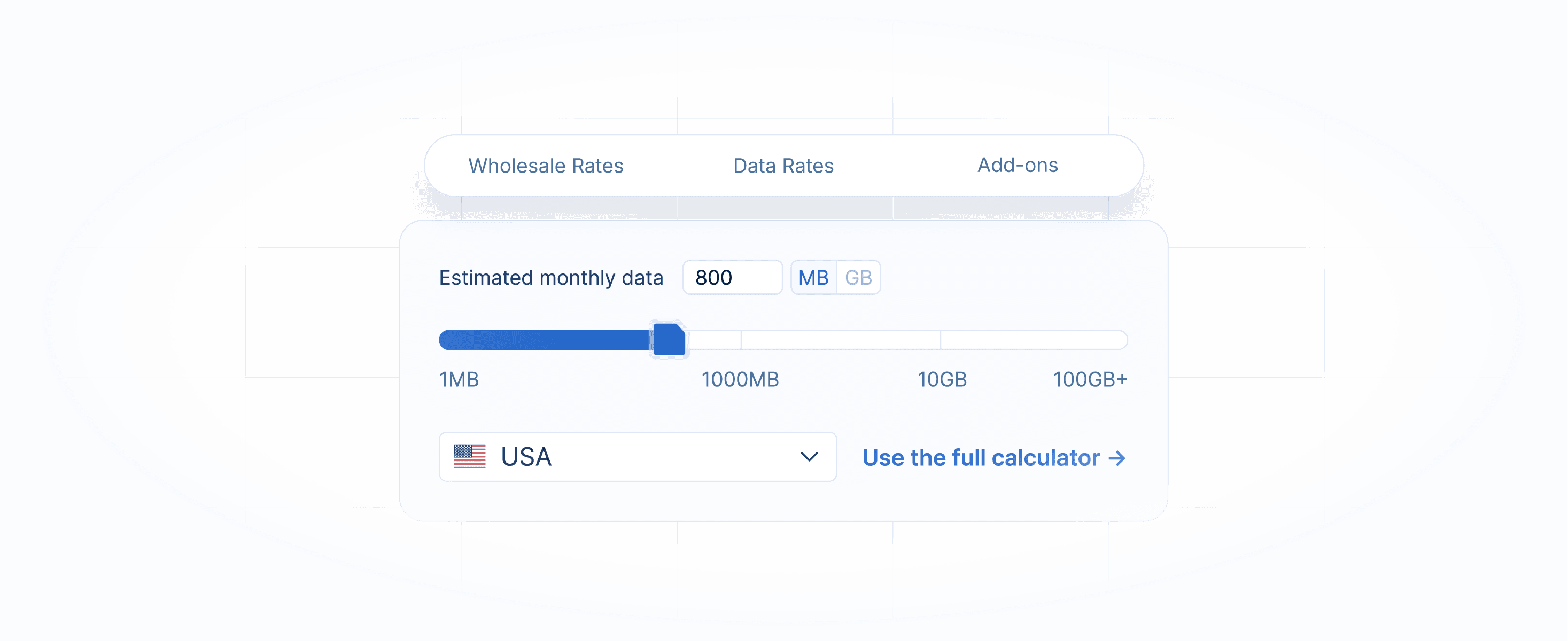
    Deploy hundreds or thousands of connected devices with transparent pricing, month-to-month flexibility, and no per-SIM monthly minimums.

Technical specifications

Built for Industrial IoT deployments

Form factors
Choose from plastic SIM (2FF, 3FF, 4FF), industrial MFF2, or eSIM (eUICC) to support industrial sensors, connected machinery, PLCs, smart meters, gateways, surveillance equipment, and embedded Industrial IoT devices.
Global connectivity
Deploy Industrial IoT solutions across more than 180 countries with Multi-IMSI connectivity that automatically connects to supported mobile networks, helping maintain reliable connectivity across manufacturing facilities, utility infrastructure, warehouses, and remote industrial sites.

Network support
Compatible with 2G, 3G, 4G LTE, LTE-M, NB-IoT, and 5G, making it easy to connect industrial sensors, automation systems, gateways, controllers, and other Industrial IoT devices.

APIs & integrations
Integrate connectivity into your operational technology (OT) and business systems using REST APIs and webhooks for SIM lifecycle management, automation, monitoring, and operational visibility.
Network options
Support industrial deployments with Static IP, Dynamic IPv4, IPv6, Private APNs, and VPNs for secure communication between connected equipment, operational systems, and cloud platforms.
Security & compliance
Designed for enterprise IoT deployments, Simbase supports GDPR-compliant data processing and offers private networking and security options to help organizations protect connected industrial infrastructure.
Deployment
Whether deploying connected assets across a single facility or managing thousands of Industrial IoT devices globally, activate, provision, and manage connectivity through one centralized dashboard or API.
Compare approaches

How your connectivity options compare.

Features
Features
Simbase
Local MNO contract
Multi-network connectivity
Multi-IMSI access across supported partner networks
Typically tied to one carrier per country
Industrial deployments
One SIM strategy across factories, warehouses, utility sites, and remote infrastructure
Separate SIMs, plans, or agreements may be required by country
SIM management
Self-service dashboard, REST API, and webhooks
Portal and API capabilities vary by carrier
Per-SIM monthly minimum
No per-SIM monthly minimums
Minimum commitments may apply
Contract flexibility
Month-to-month options available
Longer-term agreements are common
Operational visibility
Centralized SIM status, usage, and connectivity insights
Visibility varies by carrier and platform
Predictive maintenance support
Reliable connectivity for condition monitoring and real-time equipment insights
Connectivity and monitoring capabilities depend on carrier solutions
Scaling Industrial IoT
Deploy and manage thousands of connected devices from one platform
Scaling often requires multiple carrier relationships and additional operational processes
Expanding into new markets
Support global Industrial IoT deployments without changing your connectivity platform
Expansion often requires additional carrier relationships and operational processes

Assessments as of 2026, based on publicly advertised plans and feedback from shared prospects. Published for transparency, not to disparage.

For whom

Connectivity for every industrial environment

  • Manufacturing

    Keep production moving.

    Support connected machinery, factory automation, and production equipment with reliable cellular connectivity that helps minimize downtime and improve operational visibility.

  • Predictive Maintenance

    Stay ahead of equipment failures.

    Connect sensors and monitoring systems that provide real-time machine data, helping maintenance teams identify issues before they impact operations.

  • Utilities & Energy

    Monitor critical infrastructure remotely.

    Connect smart meters, substations, renewable energy assets, and remote utility infrastructure with secure, resilient cellular connectivity.

  • Industrial Equipment Manufacturers

    Build connectivity into every machine.

    Embed global cellular connectivity into Industrial IoT products with centralized SIM management and flexible deployment options that scale with your customers.

Glossary

Plain-language terms.

Industrial IoT (IIoT)
Industrial IoT (IIoT) refers to the use of connected sensors, machines, and industrial equipment that collect and exchange data to improve operational efficiency, automate processes, and support predictive maintenance.
Predictive Maintenance
Predictive maintenance uses real-time data from connected equipment to identify signs of wear or failure before problems occur, helping organizations reduce downtime, extend equipment life, and lower maintenance costs.
Condition Monitoring
Condition monitoring is the continuous measurement of equipment performance, such as vibration, temperature, pressure, or power consumption, to detect changes that may indicate developing faults.
PLC (Programmable Logic Controller)
A PLC is an industrial computer used to automate machinery and manufacturing processes. PLCs monitor inputs, control equipment, and execute programmed logic in factories and industrial facilities.
SCADA
Supervisory Control and Data Acquisition (SCADA) is a system used to monitor, control, and collect data from industrial equipment and infrastructure, providing operators with real-time visibility into connected assets.
Smart Meter
A smart meter is a connected device that automatically measures and transmits electricity, gas, or water consumption, allowing utilities and organizations to monitor usage without manual readings.
eSIM (eUICC)
An eSIM (Embedded Universal Integrated Circuit Card) is a programmable SIM technology that allows cellular profiles to be remotely provisioned and updated without replacing the physical SIM, simplifying large-scale Industrial IoT deployments.
MFF2
MFF2 is an industrial-grade embedded SIM form factor that is soldered directly onto a circuit board. It is designed for harsh environments where durability, vibration resistance, and long product lifecycles are essential.
Multi-IMSI
Multi-IMSI technology enables a single IoT SIM to access multiple supported mobile network profiles, helping connected industrial devices maintain reliable coverage across different regions and carrier networks.
Private APN
A Private Access Point Name (Private APN) creates a dedicated and isolated cellular network for connected devices, helping organizations improve security, control traffic, and simplify communication between Industrial IoT devices and enterprise systems.

Frequently Asked Questions

If any of your questions remain unanswered, reach out to our team to answer them for you.

What is an IoT SIM card for Industrial IoT?

An IoT SIM card provides secure cellular connectivity for industrial equipment, sensors, gateways, smart meters, and other Industrial IoT devices. Unlike consumer SIM cards, IoT SIMs are designed for long-term deployments, centralized management, and reliable operation at scale.

Can Simbase support predictive maintenance applications?

Yes. Simbase provides reliable cellular connectivity for connected sensors and monitoring devices that enable condition-based maintenance by transmitting real-time operational data from industrial equipment.

What Industrial IoT devices are supported?

Simbase supports a wide range of Industrial IoT applications, including connected machinery, industrial sensors, PLCs, gateways, smart meters, surveillance cameras, industrial routers, manufacturing equipment, and remote monitoring systems.

Can I manage Industrial IoT deployments across multiple facilities?

Yes. The Simbase dashboard provides centralized visibility and management for SIMs and connected devices across factories, warehouses, utility sites, and remote industrial locations from a single platform.

How does Simbase help secure Industrial IoT deployments?

Simbase supports features including Private APNs, VPNs, Static IP options, and centralized SIM management to help organizations build secure Industrial IoT deployments that align with their operational and security requirements.

Can Simbase support global Industrial IoT deployments?

Yes. Simbase enables organizations to deploy Industrial IoT solutions across more than 180 countries using one connectivity platform, simplifying international expansion while providing centralized management and visibility.

get started image

Keep industrial operations connected.

Support Industrial IoT deployments, simplify connectivity management, and maintain visibility across every connected asset from one centralized platform.